
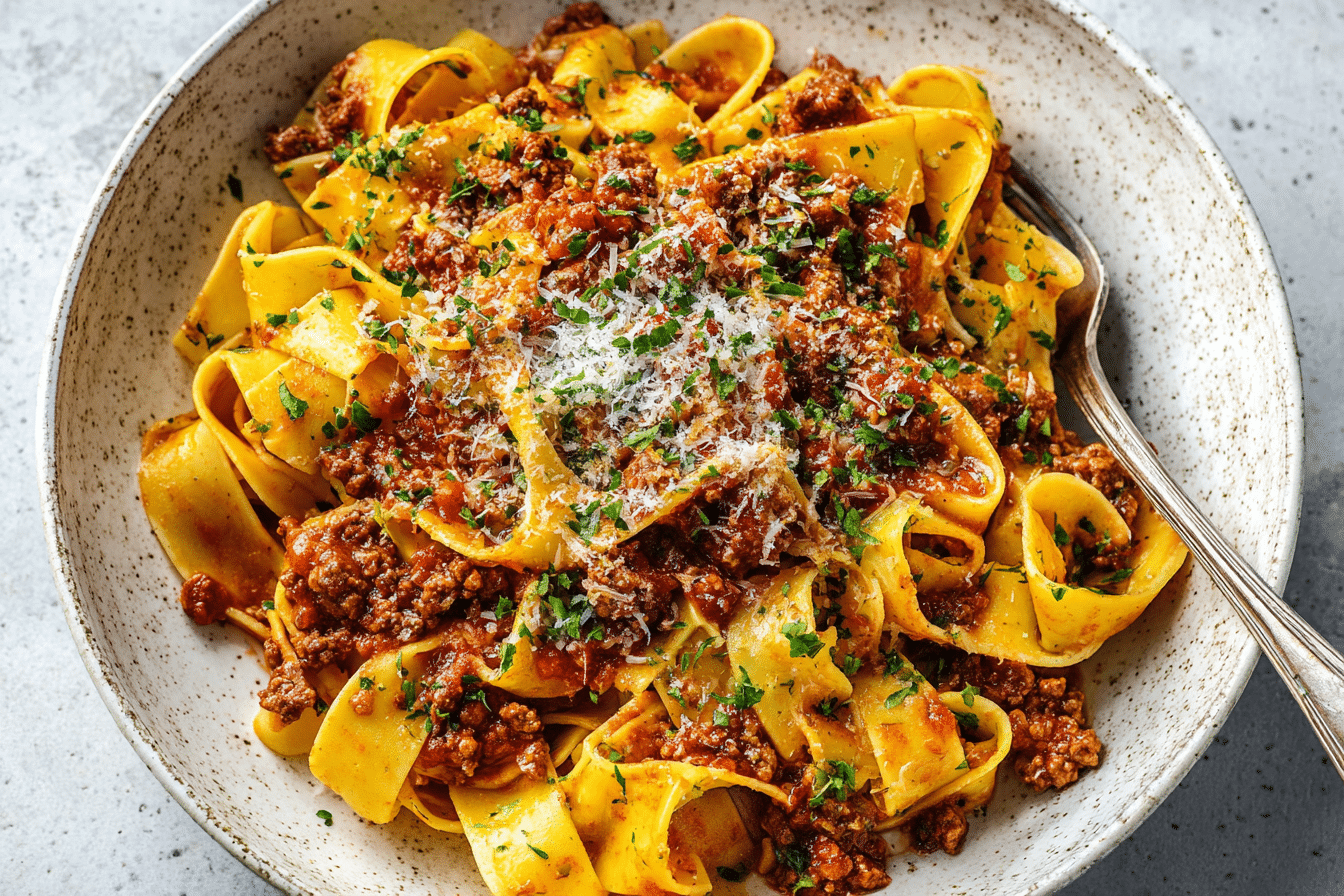
Classic Italian Bolognese Pasta is a time-honored dish rooted in the culinary traditions of Bologna, Italy. Known locally as Ragù alla Bolognese, this meaty, slow-cooked sauce is the definition of Italian comfort food — deeply savory, silky in texture, and layered with flavor. It’s a dish that rewards patience, turning a handful of humble ingredients into a luscious, full-bodied sauce that clings beautifully to ribbons of pasta.
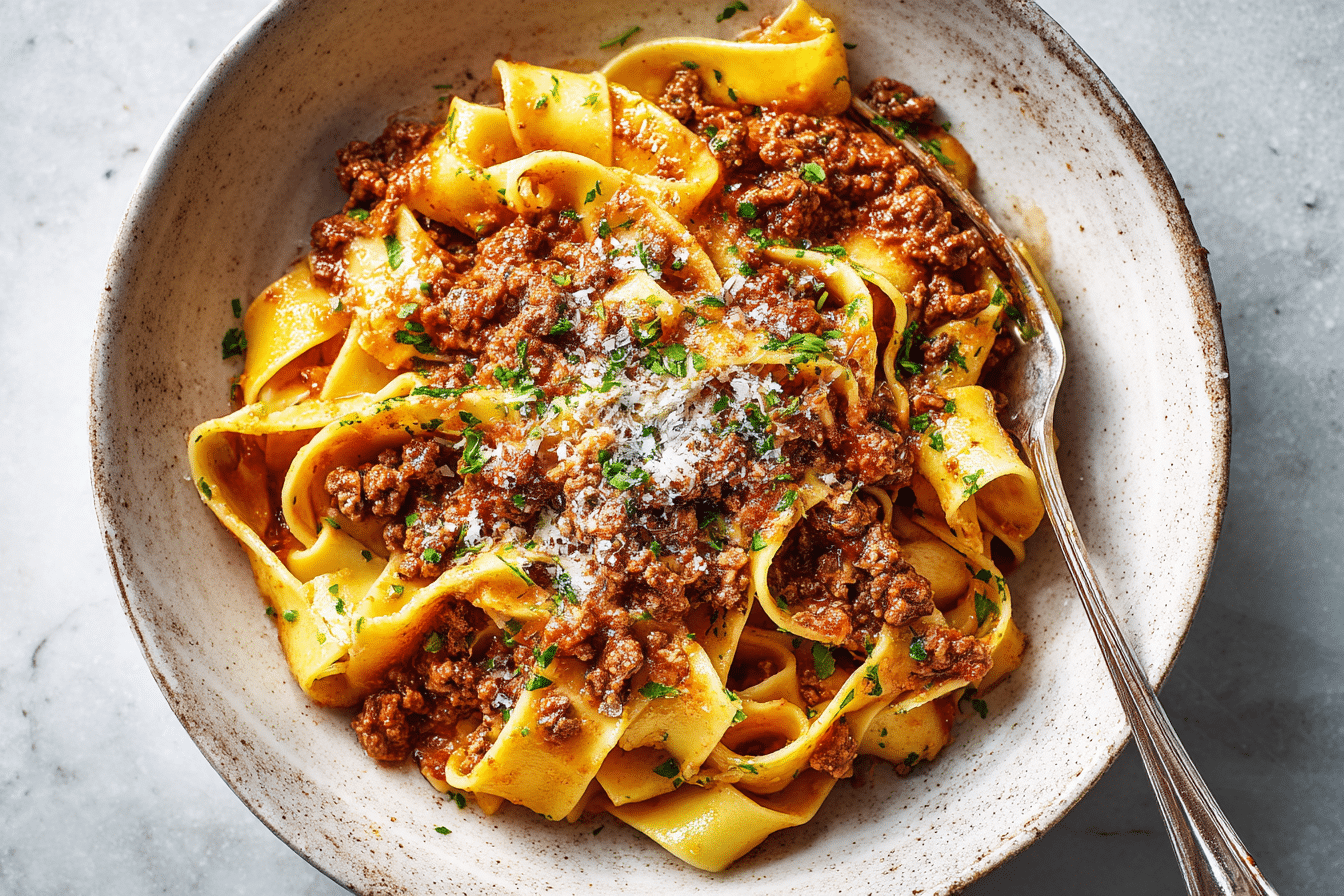
Unlike American-style “spaghetti with meat sauce,” authentic Bolognese is less about tomatoes and more about the delicate balance between meat, aromatic vegetables, wine, milk, and just enough tomato to round out the flavor. Traditionally served with tagliatelle, a fresh egg-based pasta, it’s the kind of dish meant for slow Sunday dinners, yet can be made ahead and frozen for cozy meals anytime.
Ingredients Overview
True Bolognese relies on a precise combination of ingredients that each add essential depth, richness, or body to the sauce.
Meat
-
Ground beef (80–85% lean): The base protein. Use freshly ground beef for best texture.
-
Ground pork: Adds fat and sweetness to balance the beef.
-
Optional: Add finely chopped pancetta for extra richness and authenticity.
Aromatics (Soffritto)
-
Onion, carrot, and celery (finely diced): This Italian trio lays the foundation for flavor and sweetness.
-
Use equal parts by volume, not weight.
Wine
-
Dry white wine: Adds acidity and depth, deglazing the pan beautifully.
-
Red wine can be used for a heartier flavor, but white is more traditional in Bologna.
Milk
-
Whole milk: Softens the acidity of the tomatoes and keeps the meat tender during the long simmer.
-
Helps achieve the sauce’s signature velvety finish.
Tomato
-
Tomato paste or very small amount of crushed tomatoes: Traditional Bolognese uses far less tomato than modern versions. A few tablespoons of paste are enough to provide richness without overpowering the meat.
Broth
-
Beef or chicken broth: Keeps the sauce moist as it simmers slowly.
Seasoning
-
Salt and black pepper
-
Nutmeg (optional but traditional): A pinch adds subtle warmth.
Step-by-Step Instructions
1. Start the Soffritto
-
Heat 2 tablespoons of olive oil and 1 tablespoon butter in a heavy-bottomed pot or Dutch oven over medium heat.
-
Add 1 small onion, 1 carrot, and 1 celery stalk, all finely diced.
-
Cook gently for 8–10 minutes until soft and fragrant, but not browned.
2. Brown the Meat
-
Add ½ lb ground beef and ½ lb ground pork.
-
Cook, breaking up with a wooden spoon, until fully browned and the liquid has evaporated — about 10 minutes.
-
Optional: Stir in 2–3 oz diced pancetta with the ground meat for added flavor.
3. Deglaze with Wine
-
Pour in 1/2 cup dry white wine and scrape up any browned bits.
-
Simmer until the wine has mostly evaporated.
4. Add Milk and Tomato
-
Stir in 1/2 cup whole milk and a small pinch of nutmeg.
-
Simmer until milk is mostly absorbed.
-
Add 2 tablespoons tomato paste (or 1/3 cup crushed tomatoes if preferred).
-
Stir to combine and reduce heat to low.
5. Slow Simmer
-
Pour in 1/2 to 1 cup broth to loosen the sauce.
-
Cover partially and simmer gently on low heat for 1.5 to 2 hours, stirring occasionally.
-
Add more broth as needed to maintain a saucy, not soupy, consistency.
6. Cook the Pasta
-
When the sauce is nearly done, cook tagliatelle, fettuccine, or pappardelle in salted boiling water until al dente.
-
Reserve 1/2 cup of pasta water before draining.
7. Finish and Serve
-
Taste and adjust salt and pepper.
-
Toss pasta with the sauce and a splash of reserved pasta water.
-
Serve hot with freshly grated Parmigiano-Reggiano and a sprinkle of chopped parsley if desired.
Tips, Variations & Substitutions
Cooking Tips
-
Let each step fully cook before adding the next — especially browning the meat and reducing wine.
-
Stir regularly during the long simmer to prevent scorching on the bottom.
-
Don’t skip the milk — it’s essential to soften acidity and create richness.
Variations
-
Mushroom Bolognese: Add finely chopped mushrooms to reduce meat or go partially vegetarian.
-
Sausage twist: Substitute some pork with sweet or spicy Italian sausage (casings removed).
-
Creamy finish: Stir in a tablespoon of cream or mascarpone at the end for extra silkiness.
Substitutions
-
Red wine instead of white for a deeper sauce.
-
Tomato puree instead of tomato paste, but reduce the quantity to maintain meat dominance.
-
Plant-based meat for a vegetarian version — cook as directed but skip milk if not using dairy.
Serving Ideas & Occasions
Best Pasta Types
-
Tagliatelle (traditional and preferred)
-
Pappardelle or fettuccine
-
Gnocchi or rigatoni for a rustic twist
-
Polenta or mashed potatoes for hearty comfort food
Serve With:
-
Garlic bread or crusty Italian loaf
-
Simple arugula or Caesar salad
-
Grated Parmigiano-Reggiano and a glass of red wine (Sangiovese or Chianti)
Occasions:
-
Cozy weekend dinners
-
Family gatherings
-
Special occasions or dinner parties
-
Batch cooking for freezer meals
Nutritional & Health Notes
Classic Bolognese is a rich dish, but one that’s protein-rich and nourishing in moderation. You can lighten it or bulk it up with vegetables without losing its soul.
-
Protein: High from beef, pork, and milk.
-
Fat: Balanced between meat and milk; trim fat or use lean cuts for a lighter option.
-
Carbs: Mostly from pasta — use whole wheat or gluten-free options as needed.
-
Fiber: Low unless served with vegetable sides or whole grain pasta.
Lighter Version:
-
Use lean ground turkey or chicken
-
Add shredded zucchini or mushrooms
-
Cut back on butter and use low-fat milk
FAQs
Q1: Can I make Bolognese in advance?
Yes! Bolognese tastes even better the next day. Store in the fridge for up to 4 days or freeze for up to 3 months. Reheat slowly over low heat.
Q2: Is Bolognese the same as meat sauce?
Not quite. American meat sauce is often tomato-heavy and quicker. Bolognese is meat-forward, gently simmered, and uses milk and wine for depth.
Q3: Why is milk added to the sauce?
Milk tenderizes the meat and balances the acidity from tomatoes and wine. It also gives the sauce a velvety texture.
Q4: What kind of wine is best for Bolognese?
Dry white wine is traditional (like Pinot Grigio or Soave), but red wine like Chianti or Merlot works well for a richer flavor.
Q5: What pasta shape holds Bolognese best?
Tagliatelle, pappardelle, and fettuccine are ideal. The wide, flat shape catches the sauce perfectly.
Q6: Can I use all beef instead of beef and pork?
Yes, but pork adds sweetness and fat. If using only beef, consider adding a splash more milk or a small amount of butter for balance.
Q7: How do I avoid oily or greasy sauce?
Use well-balanced meat (not too fatty), drain excess fat after browning, and let the sauce reduce properly. Skim excess fat off the top before serving if needed.
Classic Italian Bolognese Pasta – Rich, Slow-Simmered, and Traditional
A rich and traditional Bolognese sauce made with ground beef, pork, aromatic vegetables, wine, milk, and tomato — slow-simmered and served over tagliatelle for a true taste of Italy.
Ingredients
-
1 tbsp olive oil
-
1 tbsp butter
-
1 small onion, finely diced
-
1 carrot, finely diced
-
1 celery stalk, finely diced
-
½ lb ground beef
-
½ lb ground pork
-
½ cup dry white wine
-
½ cup whole milk
-
2 tbsp tomato paste
-
1 cup beef or chicken broth (as needed)
-
Salt and pepper, to taste
-
Pinch of nutmeg (optional)
-
Fresh tagliatelle or fettuccine
-
Grated Parmigiano-Reggiano, for serving
Instructions
-
Heat oil and butter. Sauté onion, carrot, and celery until soft.
-
Add ground meats. Cook until browned and liquid evaporates.
-
Deglaze with wine. Simmer until mostly evaporated.
-
Add milk and nutmeg. Simmer until absorbed.
-
Stir in tomato paste. Add broth and simmer on low for 1.5–2 hours.
-
Cook pasta. Toss with sauce and a splash of pasta water.
-
Serve hot with Parmesan and parsley.
Notes
-
For best flavor, simmer longer and cool overnight.
-
Use less tomato to keep the sauce meat-forward.
-
Freeze extra portions for quick meals later.