
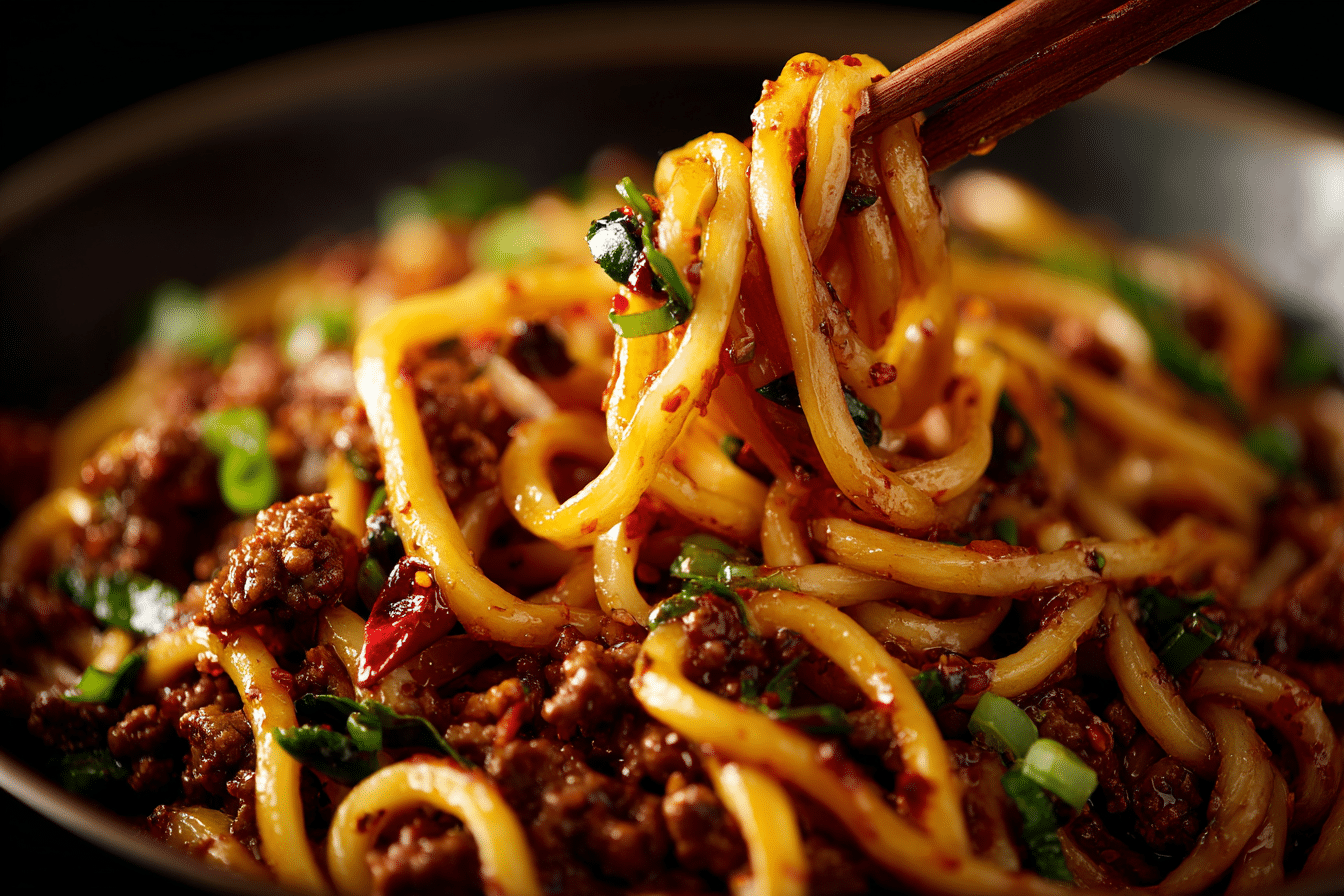
Asian-Style Ground Beef Spaghetti brings together the familiar comfort of pasta with the savory depth of soy sauce, garlic, and ginger. It is a weeknight-friendly dish that cooks quickly while delivering layered flavor in every bite.
Tender spaghetti strands soak up a glossy sauce made from browned ground beef and aromatic seasonings. The result is a satisfying combination of hearty texture and balanced saltiness, accented by subtle sweetness and gentle heat.
This recipe feels both comforting and refreshing, offering a creative twist on traditional spaghetti without straying into complicated techniques. Whether served for a casual family dinner or prepared ahead for meal planning, Asian-Style Ground Beef Spaghetti fits seamlessly into busy schedules while still feeling thoughtfully prepared.
Ingredients Overview
Ground beef forms the rich, savory base of Asian-Style Ground Beef Spaghetti. An 85 to 90 percent lean blend works well, providing flavor without excess grease. Leaner beef can be used, though a small amount of fat helps carry the sauce.
Spaghetti serves as the foundation. Classic dried spaghetti holds the sauce beautifully, though whole wheat spaghetti adds fiber and a slightly nutty note. Rice noodles can be substituted for a different texture, but cooking times will vary.
Soy sauce provides depth and saltiness. Regular soy sauce offers bold flavor, while low-sodium versions allow better control of salt levels. Tamari is a suitable gluten-free option.
Fresh garlic and ginger create the aromatic backbone of the sauce. Garlic contributes warmth, while ginger adds brightness and gentle spice.
Brown sugar balances the saltiness of soy sauce. A small amount enhances the savory notes without making the dish sweet. Honey can replace brown sugar if preferred.
Sesame oil brings a nutty finish. It should be added toward the end of cooking, as high heat can dull its fragrance.
Green onions add freshness and mild sharpness. Thin slices scattered on top brighten the finished dish.
Optional additions include shredded carrots for sweetness, sliced bell peppers for color and crunch, or a spoonful of chili paste for subtle heat.
Step-by-Step Instructions
Begin by bringing a large pot of salted water to a boil. Add the spaghetti and cook according to package instructions until al dente. Reserve half a cup of pasta water before draining, then set the pasta aside.
While the pasta cooks, heat a large skillet over medium-high heat. Add the ground beef and cook, breaking it apart with a wooden spoon. Allow it to brown thoroughly, forming small caramelized bits that contribute depth. Drain excess fat if necessary, leaving about a tablespoon in the pan for flavor.
Reduce heat to medium. Add minced garlic and freshly grated ginger to the beef. Stir constantly for about thirty seconds, just until fragrant. Avoid prolonged cooking at this stage to prevent bitterness.
Stir in soy sauce, brown sugar, and a splash of the reserved pasta water. The liquid should gently simmer and slightly thicken. If incorporating vegetables such as carrots or bell peppers, add them now and cook until just tender.
Add the drained spaghetti directly to the skillet. Toss thoroughly to coat every strand in the savory sauce. If the mixture appears dry, add more reserved pasta water a tablespoon at a time. The starch in the water helps the sauce cling to the noodles.
Drizzle sesame oil over the pasta and toss once more. Taste and adjust seasoning if needed.
Remove from heat and scatter sliced green onions over the top. Serve immediately while warm for the most cohesive texture.
Common mistakes include overcooking the pasta, which can lead to a soft texture, and adding too much soy sauce at once. Gradual seasoning allows better balance.
Tips, Variations & Substitutions
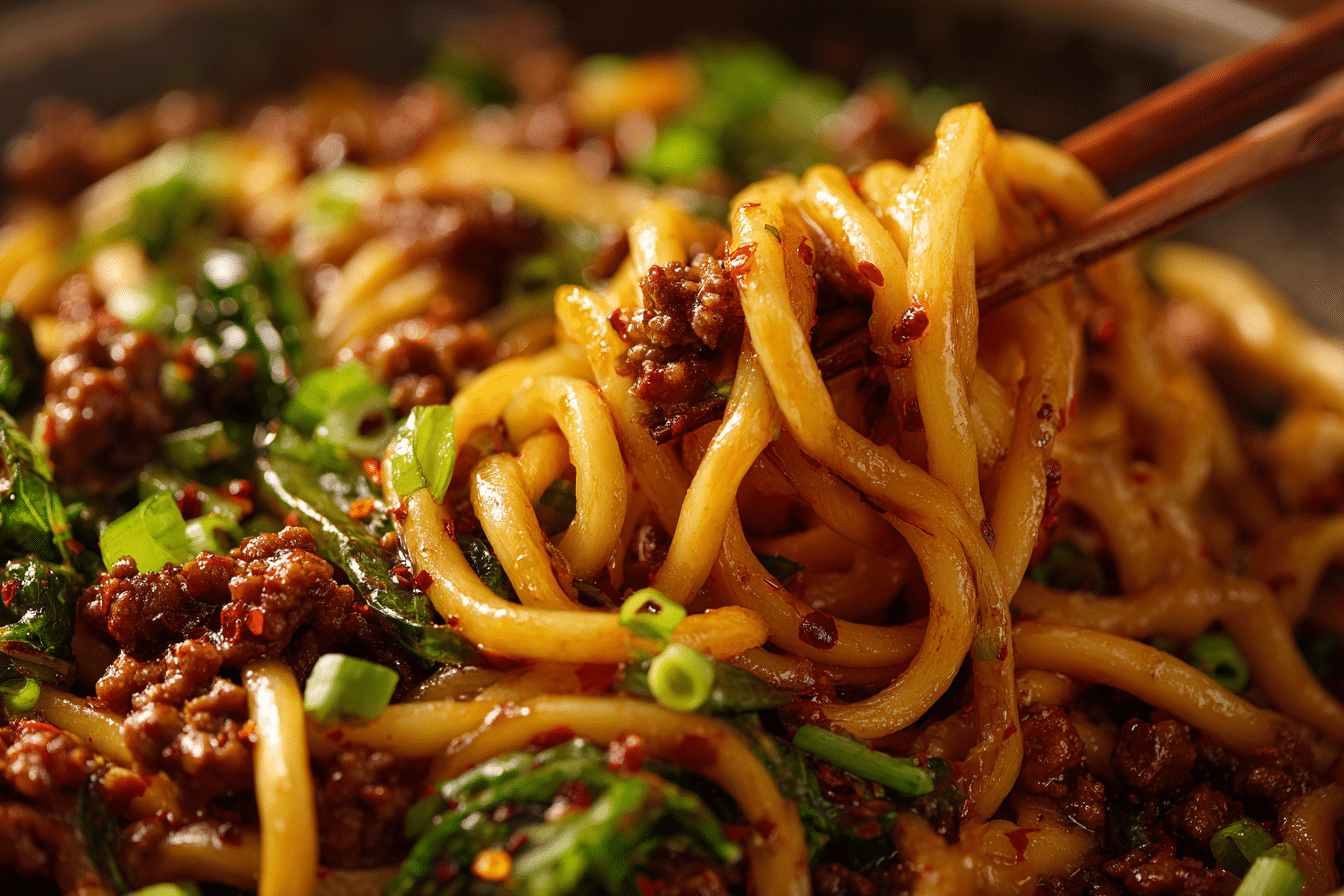
For a lighter version, ground turkey or chicken can replace beef. These options absorb flavor well while reducing fat content.
To introduce gentle heat, stir in chili garlic sauce or red pepper flakes. Add small amounts and taste as you go to maintain balance.
For additional vegetables, consider finely chopped mushrooms. They blend seamlessly with ground beef and add moisture without altering the core flavor.
A splash of rice vinegar can brighten the sauce if a slightly tangier profile is desired.
Leftovers store well in an airtight container in the refrigerator for up to four days. Reheat in a skillet with a small splash of water to restore moisture.
Serving Ideas & Occasions
Asian-Style Ground Beef Spaghetti pairs nicely with a crisp cucumber salad dressed in rice vinegar and sesame seeds. The cool crunch contrasts beautifully with the warm pasta.
Steamed broccoli or sautéed bok choy complement the savory notes of the dish. For beverages, green tea or sparkling water with citrus slices keeps the meal balanced.
This pasta works well for quick family dinners, casual gatherings, or weekly meal preparation. It travels well for packed lunches and reheats without losing its texture.
Nutritional & Health Notes
Ground beef supplies protein, iron, and essential B vitamins. Choosing lean beef moderates saturated fat while maintaining flavor.
Soy sauce contributes sodium, so selecting a low-sodium variety may help manage intake. Adding vegetables increases fiber and micronutrients, enhancing overall nutritional balance.
Spaghetti provides carbohydrates for energy. Whole wheat versions offer additional fiber, supporting digestion and fullness.
Balanced portions and thoughtful ingredient choices allow this dish to fit comfortably within a varied eating pattern.
FAQs
1. Can I prepare Asian-Style Ground Beef Spaghetti in advance?
Yes, it can be prepared ahead and stored in the refrigerator for up to four days. Allow it to cool completely before sealing in a container. When reheating, add a tablespoon or two of water to restore moisture and toss gently over medium heat.
2. Can I freeze this spaghetti?
Freezing is possible, though texture may soften slightly after thawing. Store in freezer-safe containers for up to two months. Thaw overnight in the refrigerator before reheating on the stovetop.
3. How can I prevent the noodles from sticking together?
Tossing the drained spaghetti with the sauce immediately helps prevent clumping. Reserving pasta water also assists in creating a cohesive sauce that coats strands evenly.
4. Is this recipe very salty?
Saltiness depends on the soy sauce used. Low-sodium soy sauce offers better control. Taste the sauce before adding additional seasoning.
5. Can I use fresh noodles instead of dried spaghetti?
Fresh noodles can be substituted. Cook them according to their package instructions, which typically require less time than dried pasta. Monitor closely to avoid overcooking.
6. What vegetables work best in this recipe?
Shredded carrots, bell peppers, snap peas, and mushrooms all integrate well. Choose vegetables that cook quickly to maintain balanced texture.
7. How can I make this dish gluten-free?
Use gluten-free spaghetti and tamari instead of regular soy sauce. Confirm that all other ingredients are certified gluten-free to maintain dietary suitability.
PrintAsian-Style Ground Beef Spaghetti: 30-Minute Bold Comfort Dish
Savory spaghetti tossed with seasoned ground beef, garlic, ginger, and soy sauce for a comforting fusion dish ready in about 30 minutes.
Ingredients
12 ounces spaghetti
1 pound ground beef
3 cloves garlic minced
1 tablespoon fresh ginger grated
1/4 cup soy sauce
1 tablespoon brown sugar
1 teaspoon sesame oil
1/4 cup reserved pasta water
2 green onions sliced
Optional shredded carrots or bell peppers
Instructions
-
Cook spaghetti according to package directions and reserve 1/2 cup pasta water.
-
Brown ground beef in a skillet over medium-high heat and drain excess fat.
-
Add garlic and ginger and cook briefly until fragrant.
-
Stir in soy sauce and brown sugar and simmer gently.
-
Add vegetables if using and cook until tender.
-
Toss in drained spaghetti and a splash of pasta water.
-
Drizzle sesame oil and mix thoroughly.
-
Garnish with green onions and serve warm.
Notes
Use low-sodium soy sauce for better salt control.
Add pasta water gradually for desired sauce consistency.
Reheat with a small splash of water to refresh texture.