
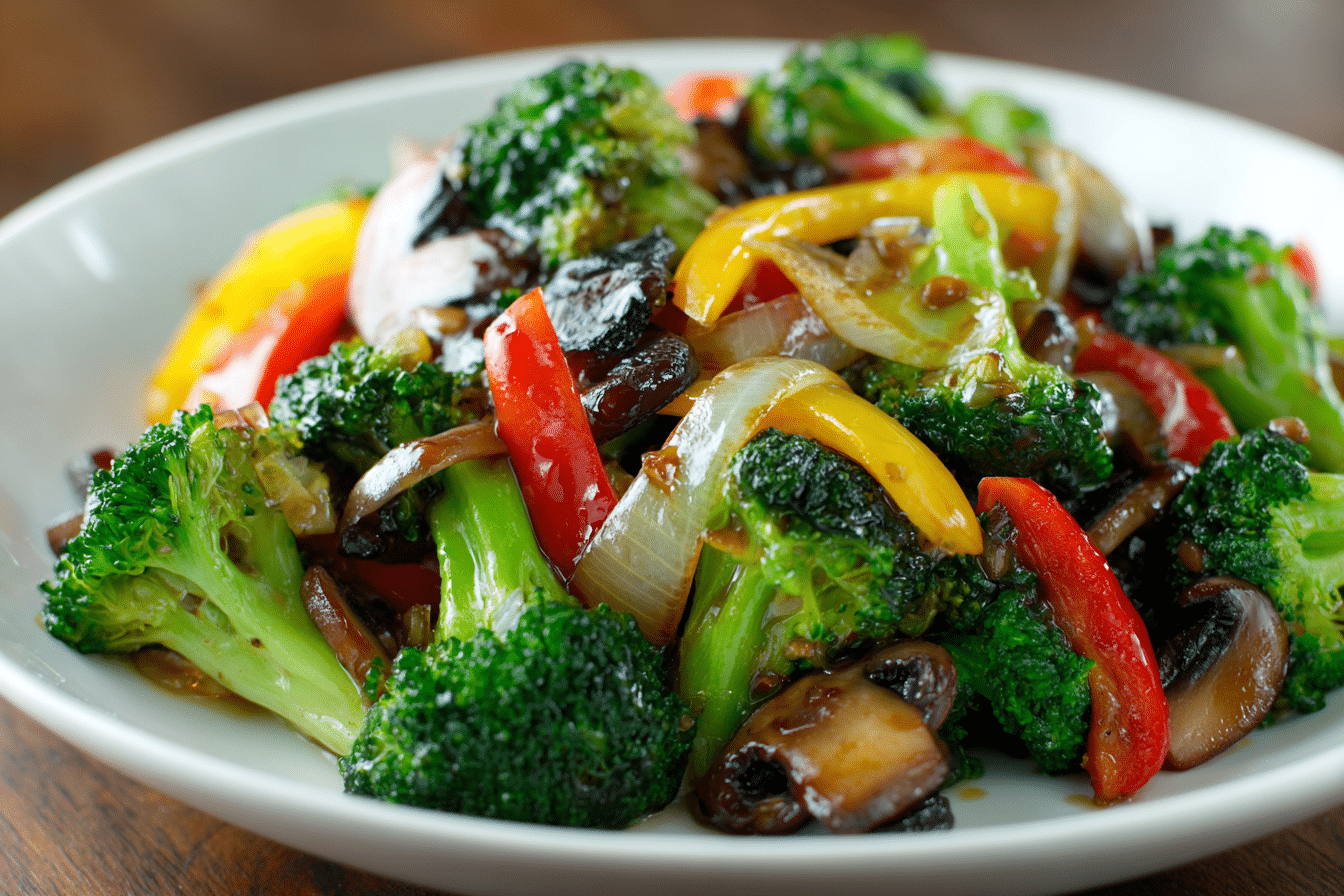
Healthy Sautéed Vegetables are the foundation of countless balanced meals. With vibrant colors, crisp-tender texture, and simple seasoning, this dish highlights the natural flavor of fresh produce without overwhelming it.
Quick cooking over medium-high heat allows vegetables to soften slightly while maintaining their brightness and gentle crunch. A touch of olive oil, garlic, and light seasoning enhances their natural sweetness and depth.
Whether served as a side dish, layered into grain bowls, or added to pasta or proteins, Healthy Sautéed Vegetables are versatile, nourishing, and ready in minutes.
Ingredients Overview
The beauty of Healthy Sautéed Vegetables lies in flexibility. You can use a mix of seasonal produce while maintaining balance in texture and flavor.
Bell peppers bring natural sweetness and vibrant color. Zucchini adds tenderness and mild flavor. Broccoli contributes structure and a satisfying bite.
Carrots provide subtle sweetness and contrast in texture. Red onion offers mild sharpness that softens beautifully when sautéed.
Garlic builds a fragrant base and enhances the overall flavor. Olive oil ensures even cooking and adds heart-friendly fats.
Salt and black pepper provide simple seasoning. A squeeze of fresh lemon juice or a sprinkle of fresh herbs such as parsley or basil brightens the final dish.
Optional additions include mushrooms for earthiness, snap peas for crunch, or spinach stirred in at the end for added nutrients.
Step-by-Step Instructions
Begin by washing and drying all vegetables thoroughly. Cut them into evenly sized pieces to ensure uniform cooking.
Heat a large skillet over medium-high heat. Add olive oil and allow it to warm until shimmering but not smoking.
Add firmer vegetables first, such as carrots and broccoli. Sauté for 3 to 4 minutes, stirring occasionally.
Next, add zucchini, bell peppers, and onion. Continue cooking for another 4 to 5 minutes, allowing vegetables to become tender yet still slightly crisp.
Add minced garlic during the final minute of cooking. Stir constantly to prevent burning.
Season with salt and black pepper to taste.
Remove from heat and finish with a squeeze of lemon juice or chopped fresh herbs.
Serve immediately while warm.
Tips, Variations & Substitutions

Avoid overcrowding the pan, as this causes steaming rather than sautéing. Cook in batches if needed.
Cut vegetables into similar sizes to promote even cooking.
For added depth, include a splash of low-sodium soy sauce or balsamic vinegar.
To make the dish heartier, add cooked chickpeas or white beans during the final few minutes.
Use avocado oil if cooking at slightly higher heat.
For extra flavor, sprinkle with toasted sesame seeds or grated parmesan before serving.
Serving Ideas & Occasions
Healthy Sautéed Vegetables pair well with grilled chicken, baked salmon, or tofu.
Serve over quinoa, brown rice, or whole-grain pasta for a complete meal.
They can also be folded into omelets or wraps for a quick lunch option.
For meal prep, portion into containers and store in the refrigerator for easy weekday additions.
Nutritional & Health Notes
This dish is rich in fiber, vitamins, and antioxidants from a variety of colorful vegetables.
Using moderate olive oil provides healthy fats while keeping the dish light.
Minimal seasoning keeps sodium levels controlled.
Because sautéed vegetables are naturally low in calories and high in nutrients, they support balanced, plant-forward eating patterns.
FAQs
1. Can I use frozen vegetables?
Yes, but thaw and pat dry before sautéing to reduce excess moisture.
2. How do I prevent vegetables from becoming soggy?
Cook over medium-high heat and avoid overcrowding the pan.
3. Can I prepare this ahead of time?
Yes. Store in the refrigerator for up to four days and reheat gently.
4. What oil is best for sautéing?
Olive oil works well for moderate heat. Avocado oil is suitable for higher temperatures.
5. Can I add protein?
Yes. Grilled chicken, shrimp, tofu, or beans pair well.
6. How do I keep the vegetables bright in color?
Avoid overcooking and remove from heat while still slightly crisp.
7. Can I season differently?
Absolutely. Add Italian herbs, cumin, smoked paprika, or chili flakes for variation.
PrintHealthy Sautéed Vegetables – 7 Fresh Flavorful Layers

Healthy Sautéed Vegetables combine fresh seasonal produce sautéed in olive oil with garlic and light seasoning for a simple, nourishing side dish.
Ingredients
1 cup broccoli florets
1 zucchini sliced
1 red bell pepper sliced
1 carrot thinly sliced
1 half red onion sliced
2 cloves garlic minced
2 tablespoons olive oil
Salt and black pepper to taste
1 tablespoon fresh lemon juice optional
2 tablespoons chopped fresh parsley optional
Instructions
-
Heat olive oil in a large skillet over medium-high heat.
-
Add carrots and broccoli and cook 3 to 4 minutes.
-
Add zucchini, bell pepper, and onion. Cook 4 to 5 minutes.
-
Stir in garlic and cook 1 minute.
-
Season with salt and pepper.
-
Finish with lemon juice and parsley if desired.
Notes
Cook in batches if pan becomes crowded. Keep vegetables slightly crisp for best texture.