
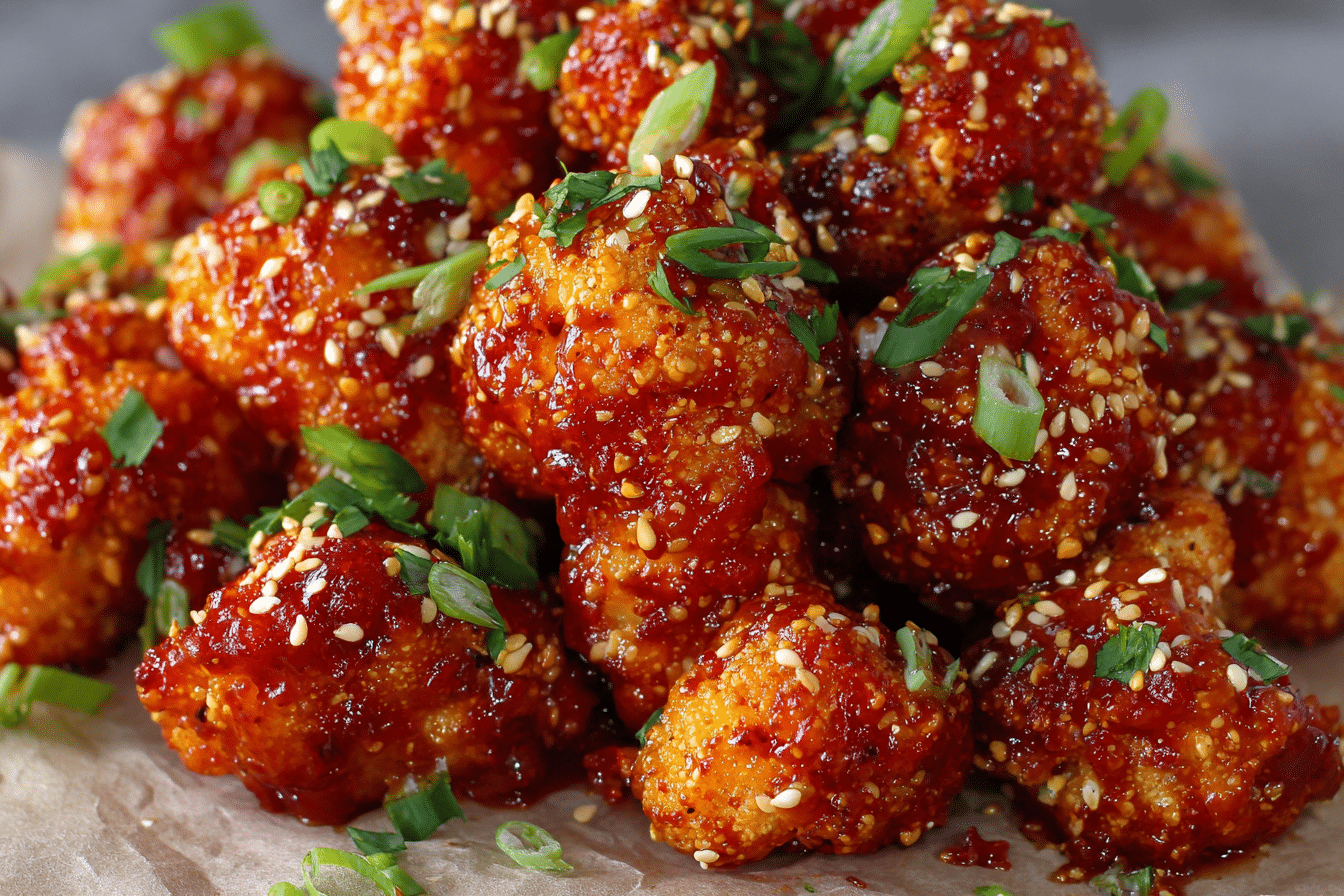
Korean-Style Baked Cauliflower brings together crisp-edged roasted florets and a sticky, savory glaze inspired by classic Korean flavors. Each bite offers tender cauliflower inside with caramelized edges outside, coated in a glossy sauce that balances heat, sweetness, and umami. The oven does most of the work, transforming simple vegetables into a deeply satisfying dish.
This recipe captures the appeal of Korean fried cauliflower without the need for deep frying. Baking allows the florets to brown and develop rich flavor while keeping the preparation straightforward. The sauce, made with gochujang, soy sauce, garlic, and a touch of honey, clings to every crevice.
Korean-Style Baked Cauliflower works equally well as a flavorful side dish, a plant-based main course, or a crowd-pleasing appetizer. Its bold glaze and slightly crisp texture make it memorable from the first bite.
Ingredients Overview
Cauliflower is the foundation of Korean-Style Baked Cauliflower. Choose a firm head with tightly packed florets and no dark spots. Cutting the cauliflower into evenly sized pieces helps promote consistent roasting and browning.
Olive oil or a neutral oil is used to coat the florets before baking. This step encourages caramelization and prevents dryness. A light coating is sufficient; too much oil can make the cauliflower soggy rather than crisp.
Cornstarch plays a subtle but important role. Tossing the florets lightly in cornstarch before baking helps create a thin, crisp exterior that mimics the texture of fried cauliflower once glazed.
Gochujang, a Korean fermented chili paste, provides the signature flavor. It brings gentle heat, savory depth, and slight sweetness. Adjust the amount depending on your heat preference.
Soy sauce adds saltiness and umami. Use low-sodium soy sauce if you want greater control over seasoning. Rice vinegar introduces brightness, balancing the richness of the glaze.
Honey or brown sugar softens the heat and helps the sauce caramelize in the oven. Fresh garlic and grated ginger add aromatic warmth that defines the dish.
A drizzle of sesame oil at the end adds nutty fragrance. Garnishes such as sliced green onions and toasted sesame seeds provide freshness and texture.
Step-by-Step Instructions
Preheat the oven to 425°F. Line a large baking sheet with parchment paper to prevent sticking and promote even browning.
Wash and thoroughly dry the cauliflower. Moisture can prevent crisping, so pat the florets dry with a clean kitchen towel. Cut into bite-sized pieces of similar size.
In a large bowl, toss the cauliflower with olive oil until lightly coated. Sprinkle cornstarch over the florets and toss again until evenly distributed. The coating should be thin and barely visible.
Spread the cauliflower in a single layer on the prepared baking sheet. Avoid overcrowding, as this can cause steaming rather than roasting. If needed, use two baking sheets.
Bake for 20 to 25 minutes, flipping halfway through, until the edges are golden brown and the florets are tender when pierced with a fork.
While the cauliflower roasts, prepare the glaze. In a small saucepan over medium-low heat, combine gochujang, soy sauce, honey, rice vinegar, minced garlic, and grated ginger. Stir gently and allow the mixture to simmer for 2 to 3 minutes until slightly thickened. Remove from heat and stir in a small drizzle of sesame oil.
Once the cauliflower is roasted, transfer it to a large bowl. Pour the warm glaze over the florets and toss carefully to coat every piece.
Return the coated cauliflower to the baking sheet and bake for an additional 5 to 8 minutes. This final bake helps the sauce cling and caramelize slightly.
Remove from the oven and let rest for a few minutes. Garnish with sliced green onions and sesame seeds before serving.
Tips, Variations & Substitutions
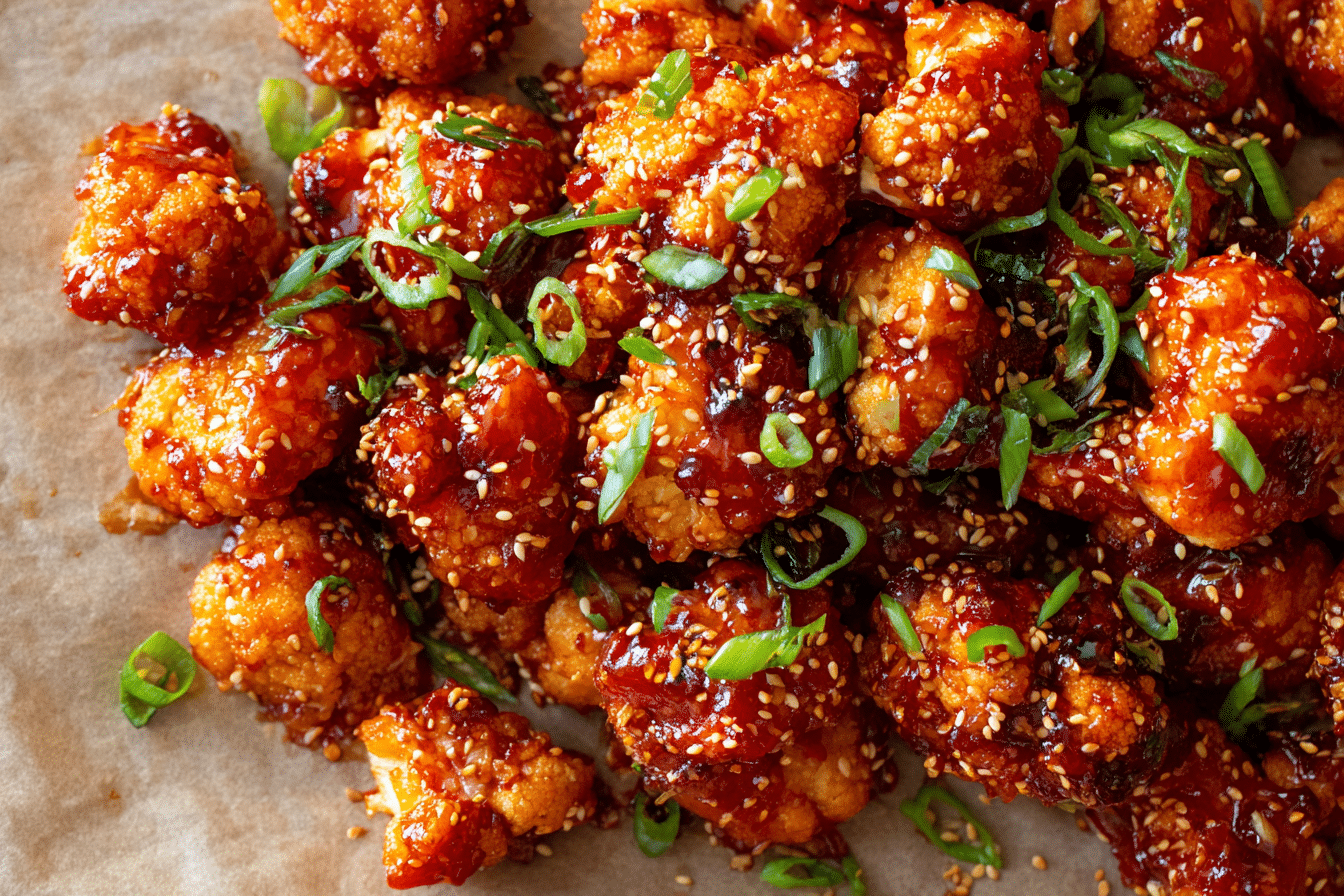
For extra crispness, place the baking sheet on the upper rack of the oven during the final minutes of roasting. Keep a close watch to prevent burning.
If gochujang is unavailable, mix chili paste with a small amount of miso and a pinch of sugar to approximate the flavor. The result will differ slightly but still provide depth.
Add a sprinkle of smoked paprika to the cornstarch mixture for subtle warmth. For additional texture, toss in roasted peanuts just before serving.
To make the dish gluten-free, use tamari instead of soy sauce and verify that the gochujang brand is gluten-free.
For a lighter glaze, reduce the honey slightly and increase rice vinegar for added brightness.
Serving Ideas & Occasions
Korean-Style Baked Cauliflower pairs beautifully with steamed jasmine rice or short-grain rice. The rice absorbs the extra glaze and balances the bold seasoning.
Serve alongside cucumber salad or lightly pickled vegetables for contrast. The crisp, tangy elements complement the rich sauce.
This dish works well as an appetizer for gatherings or as a plant-based centerpiece for a weeknight dinner. It can also be tucked into lettuce wraps with rice and shredded carrots for a fresh presentation.
Pair with sparkling water or iced green tea for a refreshing contrast to the savory glaze.
Nutritional & Health Notes
Korean-Style Baked Cauliflower offers a vegetable-forward option packed with fiber and essential nutrients. Cauliflower contains vitamin C and antioxidants, while baking keeps added fats moderate.
Using cornstarch sparingly helps achieve texture without deep frying. Adjusting the sweetness level allows better control over sugar content.
Gochujang contributes bold flavor in small quantities, reducing the need for excessive salt. Pairing the dish with whole grains and fresh vegetables creates a balanced meal.
As with many glazed dishes, portion awareness helps maintain balance, especially due to the naturally sweet and salty sauce.
FAQs
Can I air fry the cauliflower instead of baking?
Yes, air frying works well. Cook the coated florets at 400°F for about 12 to 15 minutes, shaking halfway through. After glazing, return them to the air fryer for a few additional minutes to set the sauce.
How spicy is Korean-Style Baked Cauliflower?
The heat level depends on the amount of gochujang used. Start with a smaller quantity if sensitive to spice and adjust gradually. The honey helps soften the heat.
Can I prepare this dish ahead of time?
The cauliflower is best served fresh for optimal crispness. However, you can roast the florets in advance and reheat briefly before tossing with freshly warmed glaze.
How do I store leftovers?
Store leftovers in an airtight container in the refrigerator for up to three days. Reheat in the oven at 375°F to help restore some crispness.
Can I add protein to this recipe?
Yes, baked tofu or grilled chicken can be tossed in the same glaze and served alongside the cauliflower for a more filling meal.
Why is my cauliflower soggy?
Overcrowding the baking sheet or not drying the florets thoroughly can cause steaming instead of roasting. Spread them out and bake at high heat for best texture.
Can I make it less sweet?
Reduce the honey or brown sugar slightly and increase rice vinegar for a sharper, less sweet glaze.
PrintKorean-Style Baked Cauliflower: 7-Spice Bold Delight
Roasted cauliflower florets coated in a sticky Korean-inspired gochujang glaze and baked until caramelized.
Ingredients
1 large head cauliflower, cut into florets
2 tablespoons olive oil
2 tablespoons cornstarch
2 tablespoons gochujang
1 tablespoon soy sauce
1 tablespoon honey
1 tablespoon rice vinegar
2 garlic cloves, minced
1 teaspoon grated fresh ginger
1 teaspoon sesame oil
2 green onions, sliced
1 tablespoon toasted sesame seeds
Instructions
-
Preheat oven to 425°F and line a baking sheet with parchment paper.
-
Toss cauliflower with olive oil, then sprinkle with cornstarch and coat evenly.
-
Spread in a single layer and bake 20 to 25 minutes, flipping halfway through.
-
In a saucepan, combine gochujang, soy sauce, honey, rice vinegar, garlic, and ginger. Simmer 2 to 3 minutes and stir in sesame oil.
-
Toss roasted cauliflower with glaze until coated.
-
Return to oven for 5 to 8 minutes until sauce caramelizes slightly.
-
Garnish with green onions and sesame seeds before serving.
Notes
Dry cauliflower thoroughly before roasting for best texture. Adjust gochujang and honey to taste preference.