
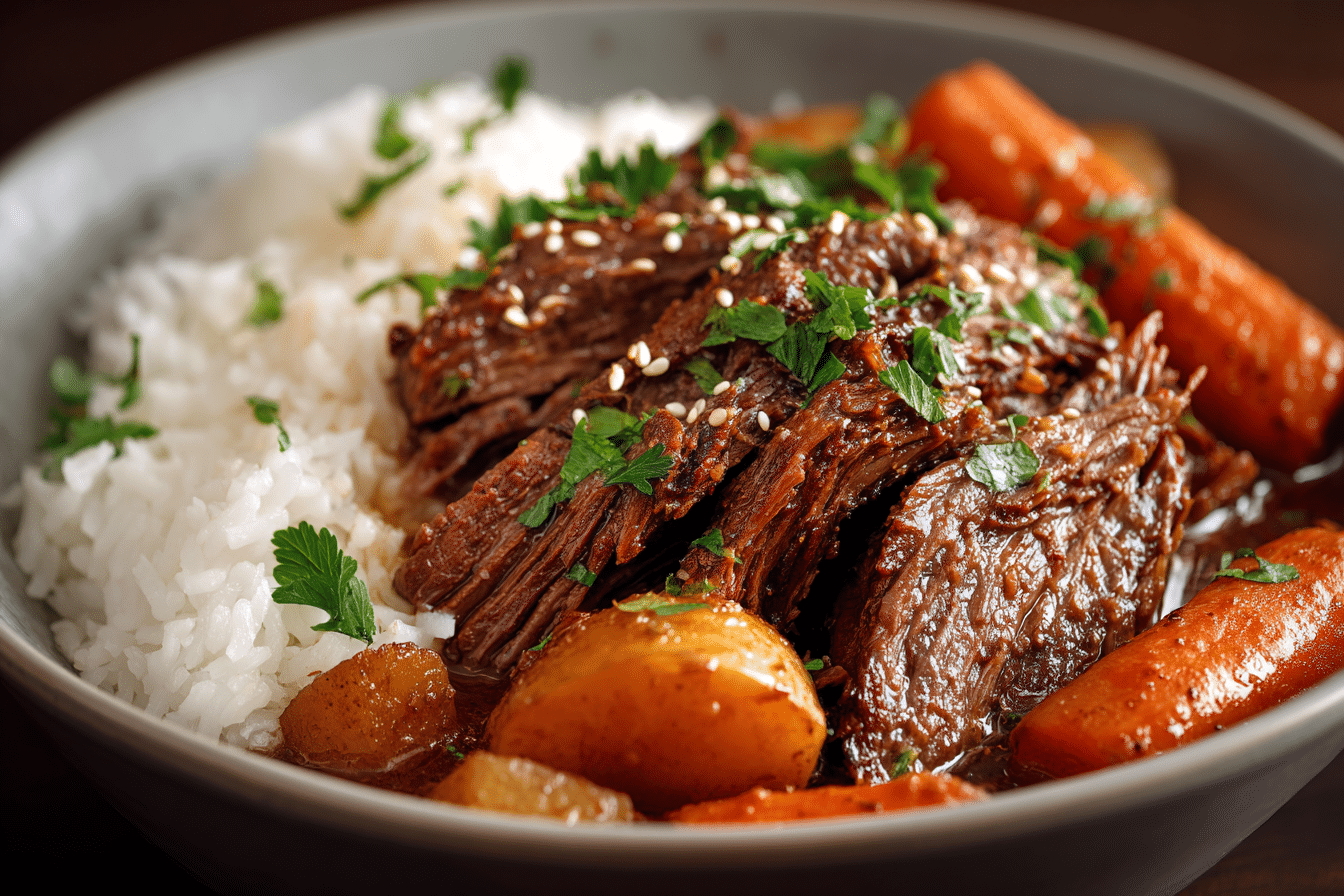
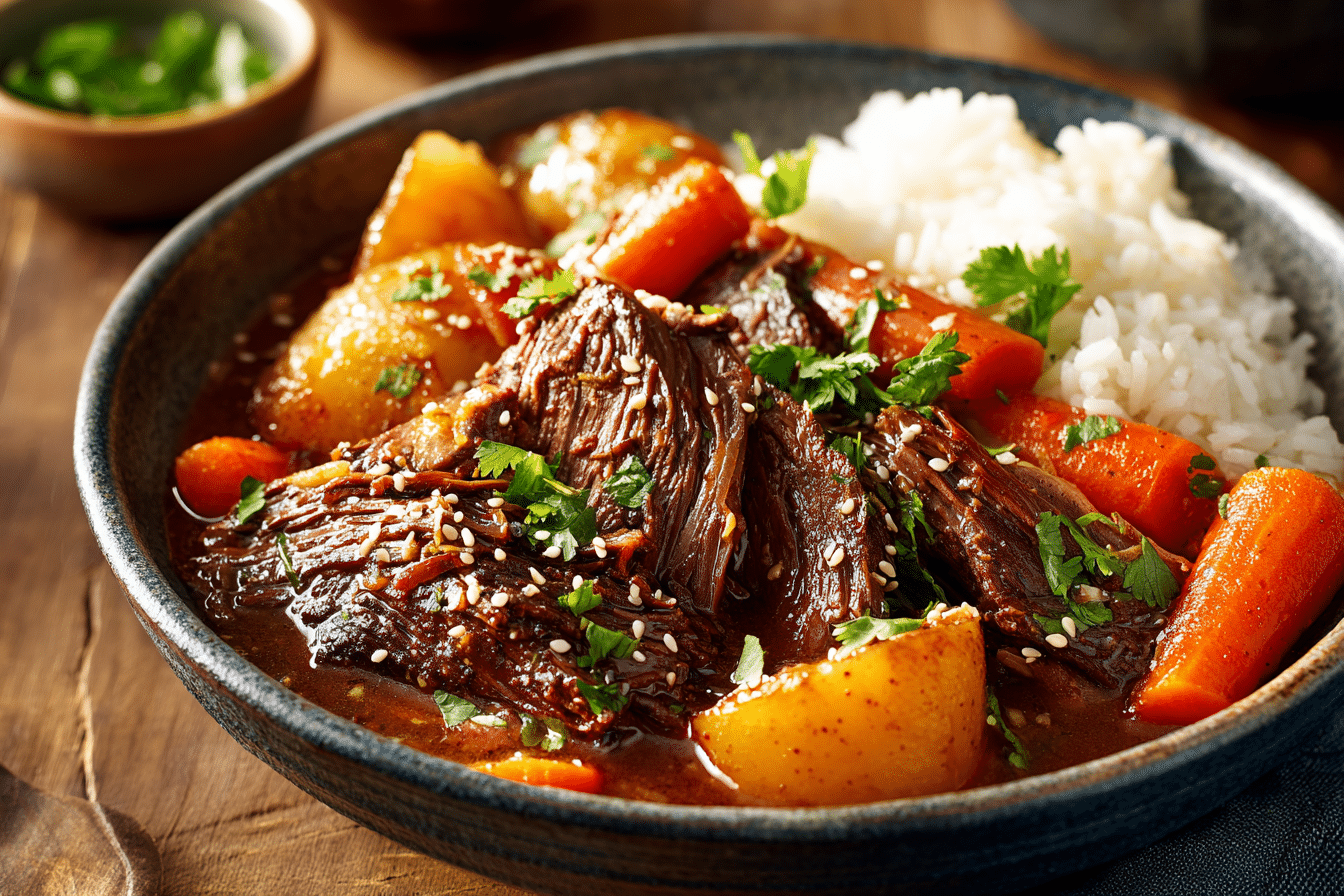
Pot roast is a time-honored dish beloved for its tender, slow-cooked meat and hearty flavors. This Korean-style pot roast takes that comfort to a whole new level with a fusion of rich umami, sweet-savory soy marinade, and aromatic ingredients like garlic, ginger, and sesame oil.
Inspired by the Korean dish galbijjim (braised short ribs), this version swaps in a chuck roast or brisket and infuses it with flavors common in Korean kitchens: gochujang (Korean chili paste), soy sauce, brown sugar, and a hint of sesame. The result is a tender, fall-apart roast bathed in a bold, deeply flavorful sauce that soaks into every bite.
It’s perfect for a cozy weekend dinner or when you want to impress guests with a dish that tastes like it took hours — because it did. But it’s worth every minute.
Ingredients Overview
Beef Chuck Roast or Brisket
Choose a well-marbled cut like chuck roast or brisket, around 3–4 pounds. The fat marbling is essential for moist, tender meat after hours of braising. Trim excess surface fat, but leave some for flavor.
Soy Sauce
Soy sauce forms the salty, umami backbone of the marinade. Use regular or low-sodium depending on your preference.
Gochujang (Korean Chili Paste)
This fermented chili paste brings subtle heat, sweetness, and complexity. It doesn’t overpower — it enhances. If you don’t have it, you can substitute with a mix of miso and chili flakes, but the flavor won’t be quite the same.
Brown Sugar or Korean Pear
To balance the salty-spicy components, use brown sugar or grated Korean pear (or apple). Korean cuisine often includes fruit to tenderize meat naturally and sweeten sauces.
Garlic and Ginger
Essential aromatics that add warmth, spice, and fragrance to the sauce. Use fresh for the best impact.
Sesame Oil
Just a small amount of toasted sesame oil gives the dish a deep, nutty aroma that’s unmistakably Korean.
Onion and Carrots
These classic pot roast vegetables help flavor the broth and become meltingly tender in the final dish.
Daikon Radish (Optional)
This Korean twist on the traditional potato adds sweetness and texture. It softens and absorbs all the savory juices beautifully.
Beef Broth or Water
Used as the braising liquid base. Beef broth adds extra depth, but water works in a pinch when paired with soy sauce and aromatics.
Step-by-Step Instructions
1. Marinate the Beef (Optional but Recommended)
If time allows, marinate the beef overnight for deeper flavor. Mix soy sauce, gochujang, brown sugar, garlic, ginger, sesame oil, and pear or apple. Rub all over the roast, cover, and refrigerate for at least 6 hours or overnight.
2. Sear the Roast
In a large Dutch oven or heavy pot, heat oil over medium-high heat. Sear the beef on all sides until browned and caramelized — about 3–4 minutes per side. This adds rich, roasted flavor and locks in juices.
Transfer the beef to a plate.
3. Sauté Aromatics and Vegetables
In the same pot, add onions and carrots. Sauté for 4–5 minutes until slightly softened.
Stir in garlic and ginger. Cook for 1 more minute until fragrant.
Deglaze with a splash of broth or water, scraping up browned bits from the bottom.
4. Build the Braising Liquid
Add the rest of the soy sauce, gochujang, brown sugar, sesame oil, and beef broth to the pot. Return the beef to the pot, along with any marinade or juices.
Bring to a simmer, then cover.
5. Braise Low and Slow
Transfer to a 325°F (160°C) oven or continue on the stovetop. Braise for 3 to 3½ hours, turning the beef once halfway through, until fork-tender and easily shredded.
Add daikon radish (if using) during the last 45 minutes so it doesn’t overcook.
6. Rest and Shred
Remove the roast and let it rest for 10–15 minutes. Shred or slice the meat against the grain.
Skim excess fat from the sauce, then reduce it slightly over medium heat if you’d like a thicker consistency.
Tips, Variations & Substitutions
-
Slow Cooker Method: After searing, transfer all ingredients to a slow cooker and cook on low for 8–9 hours or high for 4–5 hours.
-
Pressure Cooker Method: Braise under high pressure for about 70 minutes, followed by natural release.
-
Potatoes Substitute: Use Yukon gold potatoes or sweet potatoes if daikon isn’t available.
-
Low-Sugar: Use grated apple or pear instead of brown sugar.
-
Spicier Version: Add gochugaru (Korean red pepper flakes) or an extra spoonful of gochujang.
Vegetable Add-Ins:
-
Shiitake mushrooms
-
Napa cabbage (added in last 15 minutes)
-
Snow peas or green beans (blanched and stirred in before serving)
Serving Ideas & Occasions
This Korean-style pot roast is a one-pot wonder, but the way you serve it can elevate the whole experience:
Serve with:
-
Steamed white rice or sticky short-grain rice
-
Kimchi for a spicy, tangy contrast
-
Pickled vegetables like Korean radish
-
A drizzle of the reduced braising liquid over everything
Great For:
-
Cozy weekend meals
-
Korean-inspired dinner parties
-
Meal prep — leftovers are even better the next day
-
Family-style gatherings with rice and banchan (side dishes)
Nutritional & Health Notes
This dish balances protein-rich beef with vegetables and fermented ingredients, making it flavorful and satisfying.
-
Protein: Beef offers a complete amino acid profile.
-
Fermentation Benefits: Gochujang contains probiotics that may support digestion.
-
Sugar Control: Use fruit-based sweetness (pear/apple) instead of refined sugars for a more natural approach.
For a lighter meal, serve smaller portions over cauliflower rice or alongside fresh greens. Skim fat from the top before reducing the sauce for a leaner finish.
FAQs
Q1: Can I make this dish ahead of time?
A1: Yes. In fact, the flavor improves after a day in the fridge. Reheat gently on the stove or in the oven with a splash of broth.
Q2: What cut of beef is best?
A2: Chuck roast is ideal due to its marbling and ability to become tender during long cooking. Brisket or short ribs also work well.
Q3: Is this recipe spicy?
A3: Mildly. Gochujang provides subtle heat but is balanced by sweet and savory flavors. You can adjust the spice by adding or reducing gochujang or including extra chili flakes.
Q4: Can I make it gluten-free?
A4: Use gluten-free soy sauce (tamari) and ensure the gochujang is certified gluten-free. Always check labels.
Q5: Can I skip gochujang?
A5: While it’s a key flavor in Korean dishes, you can use a mix of miso paste and chili flakes in a pinch. The flavor will be different, but still rich.
Q6: What if I don’t have daikon?
A6: Daikon adds sweetness and texture, but you can use Yukon gold potatoes, turnips, or even omit it. Add extra carrots for a simple fix.
Q7: How do I store leftovers?
A7: Cool completely, then store in an airtight container in the refrigerator for up to 4 days. Reheat in a saucepan with a splash of broth or water to loosen the sauce.
PrintKorean Style Pot Roast Recipe – A Savory Twist on a Comfort Classic
Tender, slow-braised beef infused with Korean flavors like soy sauce, gochujang, garlic, and sesame oil. A bold, comforting twist on traditional pot roast.
Ingredients
-
3–4 lb beef chuck roast
-
1 large onion, sliced
-
3 carrots, peeled and cut into chunks
-
4 cloves garlic, minced
-
1 tbsp fresh ginger, grated
-
1/2 cup soy sauce
-
2 tbsp gochujang
-
2 tbsp brown sugar or grated pear
-
1 tbsp sesame oil
-
2 cups beef broth or water
-
1 cup daikon radish, peeled and chopped (optional)
-
1 tbsp cooking oil (for searing)
Instructions
-
Optional: Marinate beef overnight with soy sauce, gochujang, sugar, garlic, and ginger.
-
Sear beef in oil until browned on all sides. Remove and set aside.
-
Sauté onions and carrots until softened. Add garlic and ginger.
-
Deglaze with a splash of broth. Stir in soy sauce, gochujang, sugar, sesame oil, and remaining broth.
-
Return beef to pot. Bring to a simmer.
-
Cover and braise in a 325°F oven for 3–3½ hours until tender.
-
Add daikon during the last 45 minutes.
-
Rest meat before slicing. Skim fat and reduce sauce if desired.
Notes
-
Can be made in a slow cooker or pressure cooker.
-
Serve with rice and kimchi.
-
Substitute daikon with potatoes or omit.