
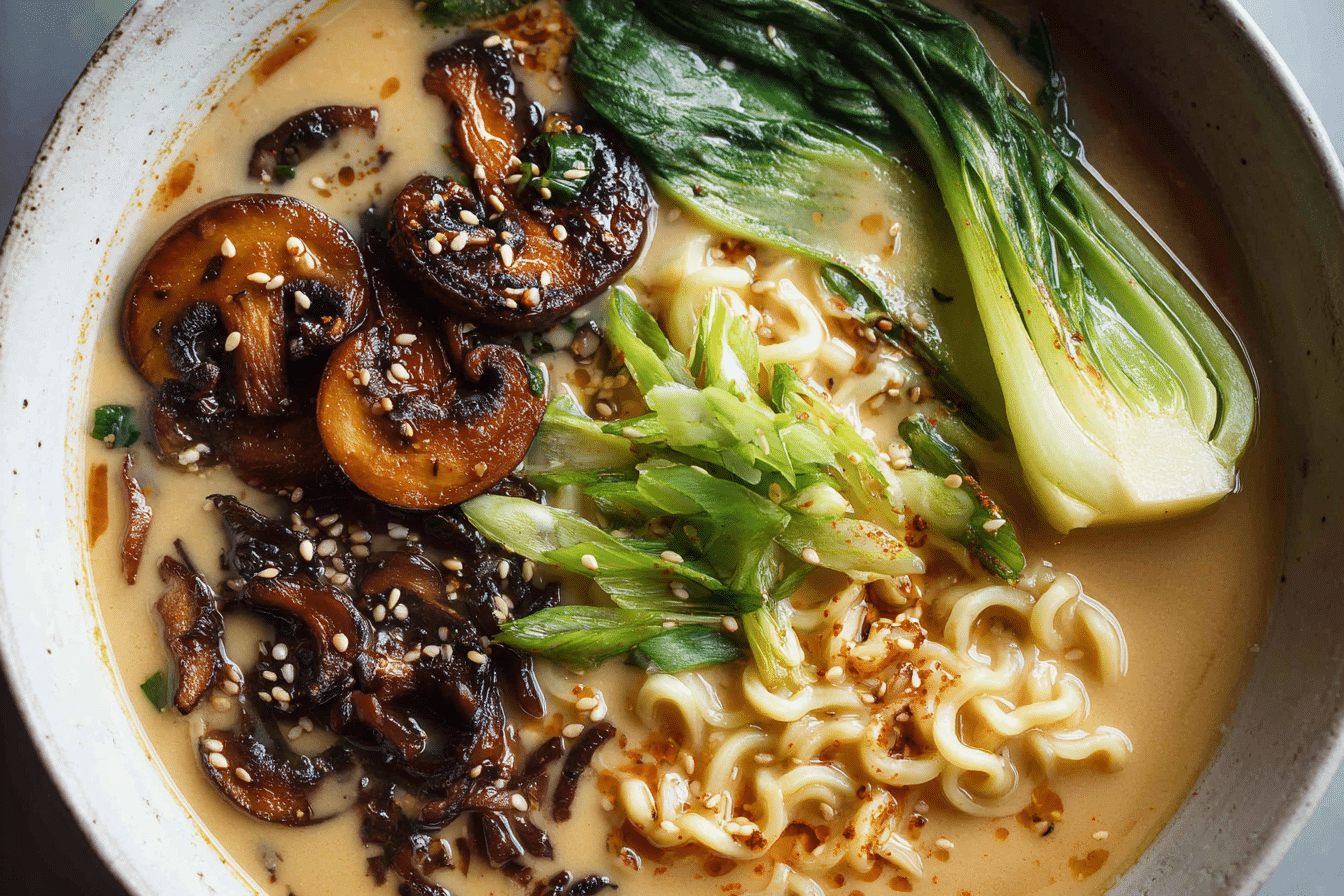
Vegan Sesame Ramen is a comforting noodle bowl built around a creamy, nutty broth and simple pantry ingredients. While traditional ramen often relies on meat-based stocks, modern plant-based versions have grown popular for their depth of flavor and everyday approachability. Sesame paste and soy-based seasonings create richness without animal products, resulting in a bowl that feels warming and complete.
This style of ramen draws inspiration from Japanese sesame ramen, sometimes called goma ramen, where toasted sesame seeds or paste are used to create a smooth, savory broth. By pairing that base with vegetables and noodles, the dish becomes both nourishing and satisfying.
Vegan Sesame Ramen works well for quiet evenings, quick lunches, or meal prep. The broth comes together quickly, the toppings are flexible, and the overall process stays calm and practical. Each bowl delivers creamy texture, gentle savory notes, and enough substance to stand on its own.
Ingredients Overview
Noodles form the heart of Vegan Sesame Ramen. Fresh ramen noodles provide the best texture, though dried ramen or udon noodles also work well. Rice noodles can be used for a gluten-free option, though the mouthfeel will be slightly different.
Sesame paste gives the broth its character. Tahini is the most accessible option and produces a smooth, nutty base. Japanese sesame paste, if available, offers a deeper toasted flavor. Toasted sesame oil supports the paste and adds aroma.
The broth begins with vegetable stock, which keeps the ramen light while allowing the sesame to stand out. Soy sauce or tamari provides salt and umami. White miso paste adds complexity and mild fermentation notes without overpowering the sesame.
Aromatics such as garlic and ginger create a savory backbone. These are gently cooked to release flavor before liquid is added. A small amount of chili paste or chili oil can be included for warmth, though it is optional.
Vegetables add color and texture. Common choices include mushrooms, bok choy, spinach, scallions, and shredded carrots. Firm tofu or edamame supplies protein and helps the ramen feel complete.
Step-by-Step Instructions
Begin by cooking the noodles according to package instructions. Drain and set aside, tossing lightly with oil to prevent sticking.
Heat a saucepan over medium heat and add a small amount of neutral oil. Add minced garlic and grated ginger, stirring gently until fragrant. Avoid browning, as this can affect the flavor of the broth.
Stir in sesame paste and miso, mixing until smooth and lightly warmed. Slowly pour in vegetable broth while stirring to prevent lumps. Add soy sauce and a few drops of sesame oil.
Bring the broth to a gentle simmer and let it cook for five to seven minutes. This allows the flavors to blend while keeping the broth smooth.
Add sliced mushrooms and firmer vegetables, cooking until tender. Stir in leafy greens at the end so they wilt without overcooking. Taste and adjust seasoning with additional soy sauce or broth.
Divide noodles between bowls and ladle the hot broth and vegetables over them. Finish with scallions, sesame seeds, and chili oil if desired.
Tips, Variations & Substitutions
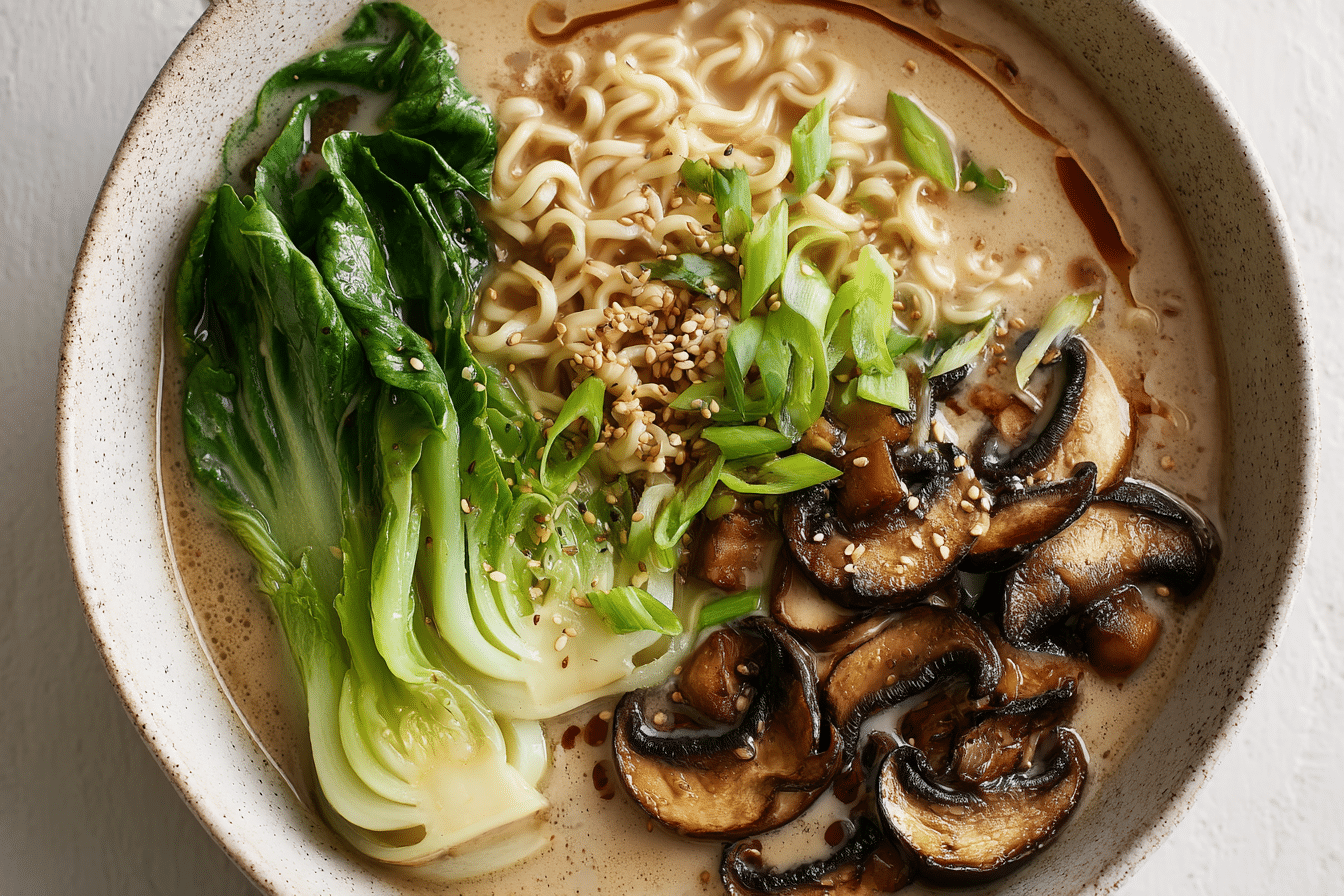
Whisking sesame paste with a small amount of warm broth before adding it to the pot helps prevent separation and keeps the broth smooth.
For extra body, a splash of unsweetened soy milk or oat milk can be added near the end of cooking. This keeps the ramen creamy without masking the sesame flavor.
If tahini tastes slightly bitter, balancing it with a small amount of maple syrup or sugar rounds out the broth naturally.
Seasonal vegetables work well in this ramen. Snow peas, zucchini, or napa cabbage can be used depending on availability.
Serving Ideas & Occasions
Vegan Sesame Ramen is best served immediately while the noodles are tender and the broth is hot. It suits quiet dinners, casual lunches, or simple gatherings where guests can customize their bowls.
Serve with lime wedges or rice vinegar on the side for brightness. Pickled vegetables add contrast and work well alongside the creamy broth.
For shared meals, set out toppings such as nori strips, corn, chili oil, and extra sesame seeds so each bowl can be finished to preference.
Nutritional & Health Notes
This ramen provides plant-based protein from tofu or edamame, along with healthy fats from sesame. Sesame seeds contain minerals and contribute to satiety.
Using a broth-based soup keeps the dish balanced, while vegetables add fiber and variety. Sodium levels can be managed by choosing low-sodium broth and adjusting soy sauce to taste.
Vegan Sesame Ramen fits well into a varied plant-forward eating pattern when enjoyed with attention to portion size and ingredient quality.
FAQs
Q1: Can tahini replace sesame paste?
Yes. Tahini is the most common substitute and works well, though it is slightly less toasted in flavor.
Q2: Is this ramen spicy?
It is mild by default. Heat can be added with chili paste or chili oil.
Q3: Can the broth be made ahead?
Yes. Store it separately and reheat gently before serving with fresh noodles.
Q4: What protein options work best?
Firm tofu, baked tofu, or shelled edamame all pair well with the sesame broth.
Q5: How can this be made gluten-free?
Use gluten-free noodles and tamari instead of regular soy sauce.
Q6: Does the broth thicken as it sits?
It may thicken slightly due to sesame paste. Add warm broth or water when reheating.
Q7: Can this be served cold?
It is designed to be served hot, though chilled sesame noodle dishes are a separate variation.
Vegan Sesame Ramen – Creamy Plant-Based Comfort Bowl
A creamy plant-based ramen made with sesame-rich broth, noodles, vegetables, and simple pantry seasonings.
Ingredients
-
2 servings ramen or udon noodles
-
1 tbsp neutral oil
-
2 cloves garlic, minced
-
1 tsp fresh ginger, grated
-
3 tbsp tahini or sesame paste
-
1 tbsp white miso paste
-
3 cups vegetable broth
-
2 tbsp soy sauce or tamari
-
½ tsp sesame oil
-
1 cup sliced mushrooms
-
2 cups leafy greens
-
½ cup tofu or edamame
-
Scallions and sesame seeds for topping
Instructions
-
Cook noodles according to package directions; set aside.
-
Sauté garlic and ginger in oil until fragrant.
-
Stir in sesame paste and miso until smooth.
-
Add broth, soy sauce, and sesame oil; simmer gently.
-
Add vegetables and cook until tender.
-
Serve broth over noodles and add toppings.
Notes
Adjust thickness with extra broth. Chili oil can be added for warmth.