
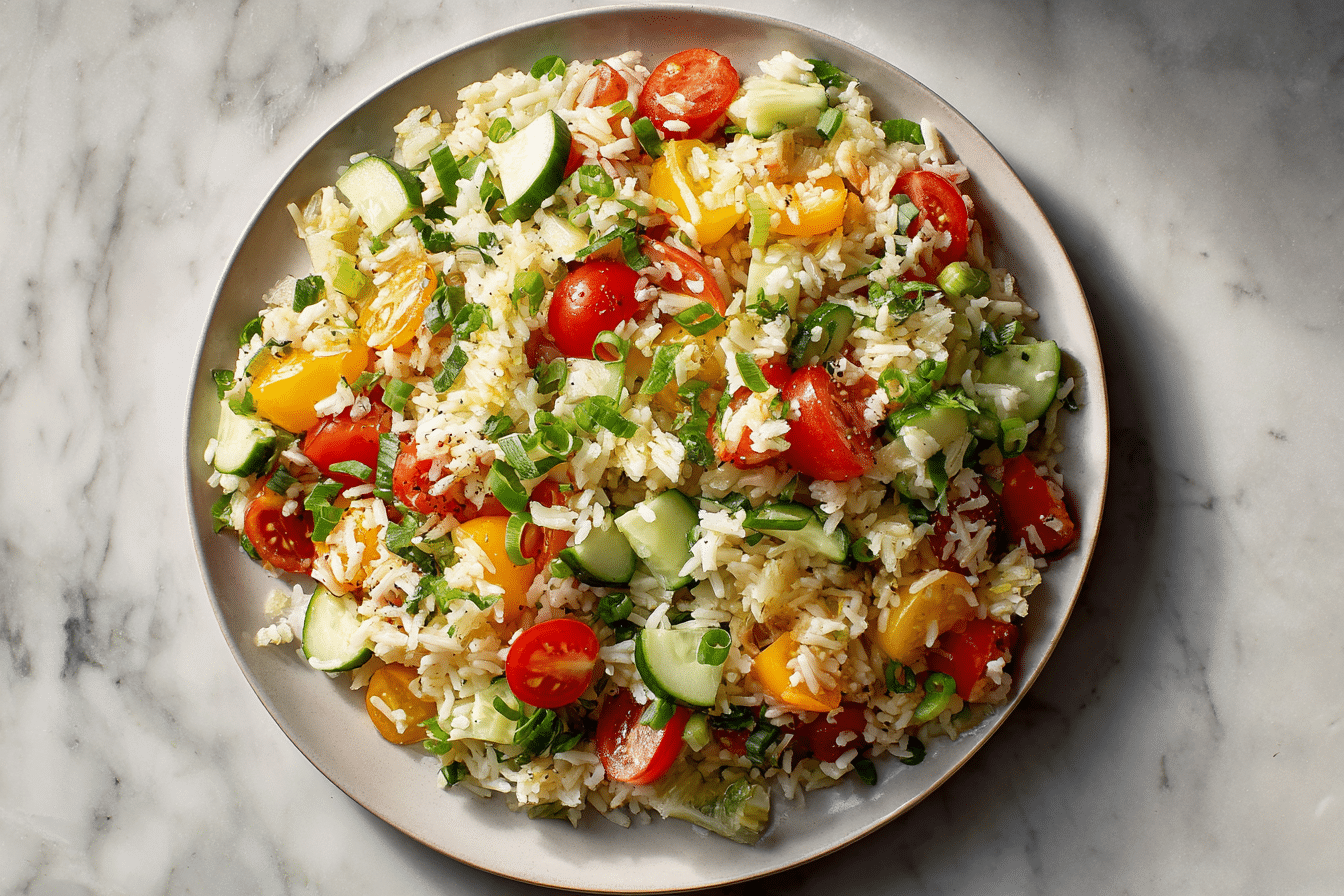
A bowl of rice salad brings together cooked rice, crisp vegetables, herbs, and a light dressing in a way that feels balanced and satisfying. Easy Rice Salad works well for quick meals, packed lunches, or shared dishes at gatherings.
This dish relies on basic pantry items and seasonal produce, making it flexible across different kitchens. The rice acts as a neutral base that carries flavor from dressing and mix-ins without overpowering them.
Rice salad can be served chilled or at room temperature, which makes it practical for meal prep. Each variation in this article focuses on approachable steps and familiar ingredients.
The result is a colorful, textured dish that fits into many eating styles while staying simple to prepare.
Ingredients Overview
Rice forms the base of this salad and provides structure. Long-grain white rice, jasmine rice, or basmati rice each work well, as they stay separate after cooking and cool without becoming sticky. Brown rice can also be used for a firmer bite and deeper nutty tone.
Vegetables add crunch and contrast. Common choices include cucumber, bell pepper, cherry tomatoes, and grated carrot. These ingredients bring freshness and moisture balance to the dish. Cooked vegetables such as corn or green beans can also be included for variation.
Herbs play an important role in building aroma. Parsley, dill, and chives are often used to lift the flavor of the rice. Fresh herbs should be chopped finely so they distribute evenly.
Protein additions are optional but useful for making the salad more filling. Chickpeas, canned tuna, shredded chicken, or boiled eggs all fit naturally into the mix. These ingredients help turn the salad into a complete meal.
The dressing usually combines olive oil, lemon juice or vinegar, salt, and black pepper. Mustard or yogurt can be added for a creamy texture. The dressing ties all components together, coating the rice lightly without making it heavy.
Substitutions are easy. Brown rice can replace white rice, lime juice can replace lemon, and canned beans can replace animal proteins. This flexibility allows the dish to adapt to what is available in the kitchen.
Ingredients
2 cups cooked long-grain rice, cooled
1 cup cherry tomatoes, halved
1 medium cucumber, diced
1/2 cup bell pepper, chopped
1/2 cup grated carrot
1/3 cup red onion, finely chopped
1/2 cup corn kernels, cooked or canned
1/2 cup chickpeas, drained and rinsed
2 tablespoons fresh parsley, chopped
1 tablespoon fresh dill, chopped
3 tablespoons olive oil
2 tablespoons lemon juice
1 teaspoon Dijon mustard
1/2 teaspoon salt
1/4 teaspoon black pepper
Step-by-Step Instructions
Start by cooking the rice according to package directions. Once the rice is tender, spread it on a tray or large plate to cool. Cooling helps the grains firm up and prevents clumping in the salad.
While the rice cools, prepare the vegetables. Wash and chop the cucumber, bell pepper, cherry tomatoes, and carrot. Slice the red onion finely so its flavor blends evenly without overpowering the dish.
If using chickpeas or corn, drain and rinse them well. If using fresh corn or green beans, cook them briefly until tender but still firm.
Prepare the dressing in a small bowl. Mix olive oil, lemon juice, Dijon mustard, salt, and black pepper. Whisk until the mixture becomes slightly thick and well combined.
Place the cooled rice in a large mixing bowl. Break up any clumps using a fork so the grains remain separate.
Add the chopped vegetables, chickpeas, corn, and herbs to the rice. Gently mix so the ingredients distribute evenly without crushing the vegetables.
Pour the dressing over the mixture. Stir slowly to coat the rice and vegetables lightly. The goal is even coverage rather than heavy saturation.
Taste and adjust seasoning with extra salt, pepper, or lemon juice if needed. Let the salad rest for about 10–15 minutes so the flavors settle together.
Serve at room temperature or chilled. Stir once more before serving to refresh the texture.
Common mistakes include using warm rice, which can make the salad sticky, or adding too much dressing, which can weigh it down. Keeping the balance between rice and vegetables is important for texture.
Tips, Variations & Substitutions
For a deeper flavor base, cook rice in vegetable broth instead of water. This adds subtle seasoning throughout the grains.
Adding toasted seeds such as sunflower or pumpkin seeds brings a light crunch. Nuts like almonds or walnuts also work well.
For a creamier version, mix in a spoonful of yogurt or a small amount of mayonnaise into the dressing. This creates a softer texture while keeping the salad cohesive.
Protein can be adjusted based on preference. Tuna offers a salty depth, grilled chicken adds a firm bite, and boiled eggs create a mild and rich contrast.
Herb combinations can shift the overall profile. Dill gives a slightly grassy aroma, parsley keeps it clean and light, while mint adds a cool note.
Vegetable swaps are flexible. Zucchini, peas, spinach, or roasted sweet potato pieces all work within the rice base.
For a citrus variation, lime juice can replace lemon juice, paired with coriander for a slightly different aroma profile.
Serving Ideas & Occasions
Easy Rice Salad fits well as a main dish for lunch or a side dish at shared meals. It pairs nicely with grilled vegetables, roasted chicken, or baked fish.
It also works for outdoor meals, picnics, and packed lunches since it holds its texture well after chilling. The dish can be prepared in advance and stored for later serving.
For gatherings, it can be placed in a large bowl and served alongside bread or flatbreads. It also complements soups during cooler seasons.
A glass of iced tea, lemonade, or lightly sparkling water pairs well with the salad’s light texture.
Nutritional & Health Notes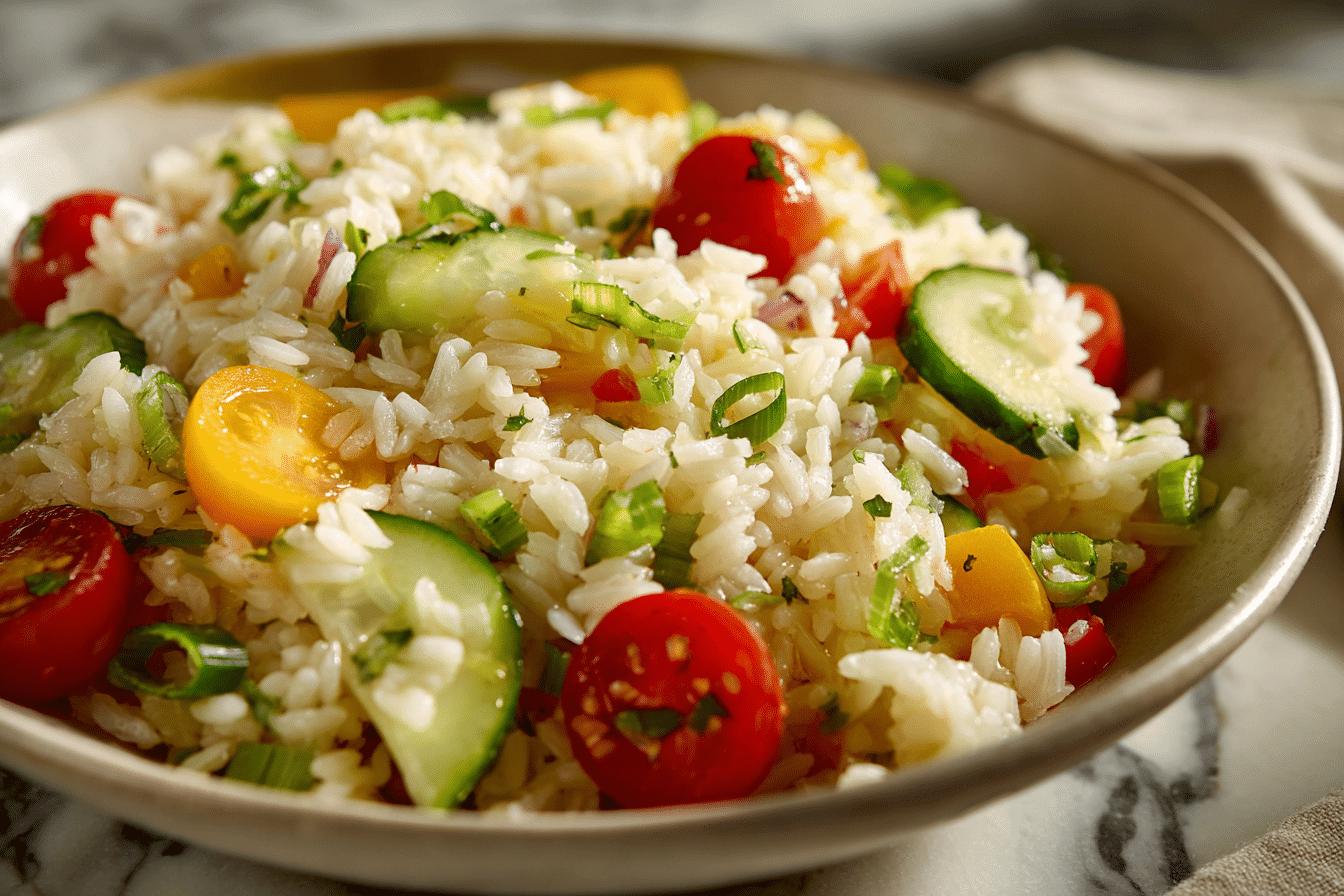
Rice salad provides a balanced mix of carbohydrates, fiber, and optional protein depending on added ingredients. Vegetables contribute vitamins and minerals, while herbs add trace nutrients and aroma.
Using olive oil in the dressing provides healthy fats that support satiety. Chickpeas or lean proteins increase protein content, making the dish more filling.
Brown rice increases fiber content, which can support digestion and longer-lasting fullness. White rice creates a lighter texture and quicker cooking process.
Portion control can be adjusted easily since the salad is flexible in composition. Adding more vegetables increases volume without significantly raising calorie content.
FAQs
Can rice salad be made ahead of time?
Rice salad can be prepared in advance and stored in a sealed container in the refrigerator. It often holds texture well for up to two days. Before serving, stir the salad to redistribute the dressing and ingredients. If it appears dry, a small drizzle of olive oil or lemon juice can refresh the consistency. Keeping vegetables slightly crisp at the time of mixing helps maintain texture during storage.
What type of rice works best?
Long-grain rice varieties such as basmati or jasmine work best because they remain separate after cooking. Short-grain rice tends to become sticky, which can change the texture of the salad. Brown rice is also suitable for a firmer bite and added fiber. The choice depends on whether a light or hearty texture is preferred.
Can frozen vegetables be used?
Frozen vegetables can be used if thawed and drained properly. Corn, peas, and green beans work especially well. It is important to remove excess moisture so the salad does not become watery. Lightly steaming frozen vegetables before adding them can improve texture.
How can the salad be made more filling?
Adding protein is the most effective way to make the salad more filling. Chickpeas, beans, tuna, chicken, or boiled eggs all work well. Including nuts or seeds also adds substance. Adjusting the rice-to-vegetable ratio can further increase satiety.
Is it possible to make it without oil?
The salad can be made without oil by using lemon juice, vinegar, or yogurt-based dressing instead. The texture will be lighter, and the flavor will rely more on herbs and seasoning. A small amount of mashed avocado can also replace oil in some versions.
What herbs work well in rice salad?
Parsley, dill, chives, mint, and coriander all work well depending on the flavor direction. Parsley offers a neutral base, dill adds a grassy note, and mint brings a cool accent. Herbs should be chopped finely to distribute evenly throughout the salad.
How long can rice salad stay fresh?
Rice salad typically stays fresh for about two days when stored in a sealed container in a refrigerator. After this period, vegetables may lose crispness and the texture may soften. Stirring before serving helps restore consistency slightly, but fresh preparation always gives the best result.
PrintEasy Rice Salad
Easy Rice Salad is a light and refreshing dish made with fluffy rice, fresh vegetables, and a simple lemon olive oil dressing.
Ingredients
2 cups cooked rice
1/2 cup cucumber
1/2 cup bell pepper
1/3 cup carrots
1/2 cup corn
2 tablespoons parsley
2 tablespoons green onions
3 tablespoons olive oil
1 tablespoon lemon juice
1/2 teaspoon salt
1/4 teaspoon black pepper
Optional chickpeas or tuna
Instructions
- Cook and cool rice.
- Prepare vegetables.
- Mix dressing ingredients.
- Combine rice and vegetables.
- Add dressing and mix.
- Serve chilled or room temperature.
Notes
Use fully cooled rice for best texture. Add protein for a fuller meal.
Prep Time: 15 minutes
Cook Time: 15 minutes
Total Time: 30 minutes
Yield: 4 servings
Calories: 280 per serving
Course: Salad
Cuisine: Mediterranean-inspired